

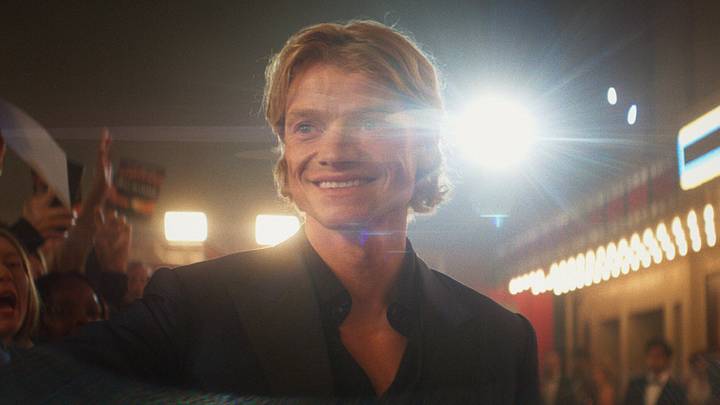
The good guys already had their chance to have fun, so now it's time for the bad guys to take center stage. The third-ever film in the DC Universe, Clayface, is here, and it shines the spotlight on Matt Hagen—a rising actor who has taken Hollywood by storm and whose stardom knows no limits. Unfortunately, all good things must come to an end, and Matt's career-ending accident will push him to become a terrifying monster who will haunt Gotham for endless nights to come.
So far, the DCU hasn't really relied on post-credits scenes to tease upcoming storylines. Superman (2025) did have a mid-credits scene and a post-credits scene, but the former was just a shot of Clark and Krypto looking over Earth, while the latter was simply a joke. Moreover, Supergirl (2026) didn't have a mid- or post-credits scene, and the same scenario also happened with the HBO show Lanterns. So, in true DCU fashion, Clayface doesn't feature an extra scene once the credits start rolling, but there's still a reason to stick around.
Clayface's end credits feature chilling music from composer Volker Bertelmann
After the monster is unleashed, the carnage stops, and Clayface comes to an end, audiences will be treated to a beautifully dramatic score by the film's composer, Volker Bertelmann. The track is titled "End Credits (Clayface)," and it features the haunting sound of a slow but impactful orchestra that is meant to represent the tragedy of Matt Hagen's story.
Fans who were hoping to catch a glimpse of Batman during the very last moments of Clayface could feel a little disappointed, as Gotham's protector isn't teased in any shape or form in the credits sequence. This makes sense, as the film is, for all intents and purposes, a villain origin story that doesn't tie into a larger DCU storyline. Clayface includes a few mentions of Wayne Enterprises, but those are the biggest references to the larger cinematic universe the project takes place in.

Matt Hagen's arc has a clear beginning, middle, and end, which is why Clayface didn't need to have a mid- or post-credits scene. Moreover, relying on this tactic would have felt a little derivative of what the Marvel Cinematic Universe has been doing for nearly two decades now. And since the DCU is still in its early days, it should figure out its own path forward.
The main downside of Clayface not having a post-credits scene is that audiences don't get a tease of where Matt Hagen's story could go next. Now that the monster is unleashed, it would've been great to have a sense of whether he'll be back or who his next victim could be. After all, we don't know much about the future of the DCU after the release of the Superman sequel, Man of Tomorrow, which will be released next year. So, Matt Hagen's future is up in the air right now.
Perhaps DC Studios wanted to wait and see how Clayface would perform at the box office before committing to Matt Hagen's return. Otherwise, this new cinematic universe may find itself with abandoned storylines from the get-go, which wouldn't be the best path forward. DC has already cancelled multiple projects such as The Authority and Sgt. Rock. As such, it wouldn't be ideal to give audiences a tease of Clayface's next adventure only for that sequence to go nowhere if the villain's film doesn't break even at the global box office.
With a bit of luck, it won't be long before the DCU unveils its next wave of projects. In the best-case scenario, not only do we learn more about Clayface's future then, but also about Batman's solo movie, The Brave and the Bold. In the meantime, we can always rewatch Clayface to see if there are any hidden Easter eggs that could hint at what Batman has been up to during this time.
Clayface is now playing in theaters.
 Add us as a preferred source on Google