

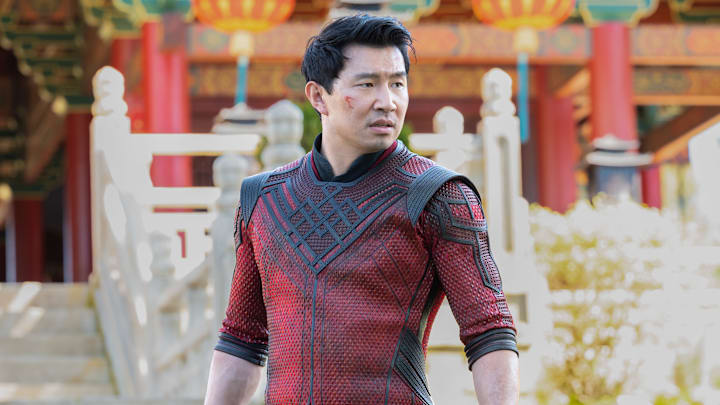
When Wonder Man premieres on Disney Plus in January, the series will mark the return of a Marvel fan favorite whose last live-action Marvel Cinematic Universe appearance was in Shang-Chi and the Legend of the Ten Rings. Unfortunately, that character isn’t the titular superhero Shang-Chi but rather Trevor Slattery.
As an actor, Trevor being a part of Wonder Man makes sense. The show centers on Simon Williams, an aspiring actor who will eventually turn into an actual superhero. Until the show is released, the full context of Trevor’s involvement and whether his role is worthwhile or necessary remains to be seen. Nothing against Trevor, but it’s disappointing to see him make a return before Shang-Chi, a newer live-action hero who should be playing a larger role in crafting the MCU's future.
Marvel wasted the momentum of Shang-Chi’s success

When Shang-Chi and the Legend of the Ten Rings premiered in September 2021, the aftermath of the Infinity Saga was still fresh. The MCU was early in its rebuilding stages, and the direction of the Multiverse Saga wasn’t clear. But even with a lesser-known character as the lead and an Asian story as the narrative, Shang-Chi did well — especially considering how it was released during the pandemic.
The movie grossed $432 million globally and received a 92% Tomatometer rating on Rotten Tomatoes. Perhaps even more important than critical acclaim and box office success, fans enjoyed the film. Now, with superhero fatigue and differing opinions about Marvel Studios post-Avengers: Endgame, the fan approval of Shang-Chi and the Legend of the Ten Rings feels even more significant. Fans enjoyed how the movie served as a well-done origin story for a non-mainstream hero, and audiences were thrilled by its action sequences.
But that was 2021. Though the positive sentiment for the film remains, Marvel never capitalized on the initial fanfare. More than four years since the movie’s theatrical release, Shang-Chi has appeared in only animated projects that aren’t part of the main MCU timeline. There has been no payoff from the movie or even Shang-Chi’s journey as a superhero since then.
Seeing the character play a role in animated outings Marvel Zombies and What If…? season 3 felt bittersweet. The appearances served as reminders about his character’s potential and what fans have been missing. It’s gratifying to have those narratives, but it’s a shame that it’s all we’ve gotten of not only Shang-Chi but his sister Xialing, too — who had a compelling future taking over the Ten Rings. Not to mention, Shang-Chi and the Legend of the Ten Rings ends by mentioning that the Ten Rings will return.
Although hope remains for a Shang-Chi sequel, the wait continues with no confirmation of when the movie will happen, just chatter about plans for it. Even Simu Liu himself has been vocal on social media about wanting to do a Shang-Chi sequel. Shang-Chi will be far from the first Marvel superhero to have to wait for a sequel. Doctor Strange’s origin film premiered in 2016, but Doctor Strange in the Multiverse of Madness wasn’t released until 2022. At this rate, however, the wait for a Shang-Chi sequel will surpass the wait for Doctor Strange’s follow-up film.
Whether Marvel’s shift from Kang to Doctor Doom as the ultimate antagonist affected plans for more Shang-Chi stories is unclear. But it’s not like Marvel is incapable of shifting plans and taking advantage of momentum when presented with opportunity.
WandaVision’s success led to Agatha All Along and the VisionQuest series scheduled for release in 2026. Shang-Chi seemed like an obvious project Marvel would want to capitalize on for the future of its cinematic universe. Now that the Multiverse Saga has developed plenty since then, it seems even more obvious that Shang-Chi is a character and story to invest in. With numbers and critique to back it up, Shang-Chi was a clear winner in a Marvel era some will argue has been full of flops and failures. So for Shang-Chi’s future to, so far, be limited to just Avengers: Doomsday is a shame.
Shang-Chi was a win for Asian representation in superhero media

Beyond any critical or monetary achievements, Shang-Chi and the Legend of the Ten Rings added much-needed Asian representation to the MCU. Before Shang-Chi’s introduction, the MCU’s Asian representation was essentially limited to Wong and Ned Leeds. Although both have qualities that make them likable, neither is a lead but rather a supporting character to a primary superhero.
An ensemble show, Agents of S.H.I.E.L.D. had a main cast featuring an Asian superhero in Chloe Bennet's Daisy Johnson/Quake and an Asian spy in Ming-Na Wen's Melinda May, whose fighting skills are arguably on-par with Black Widow. There was also Jessica Henwick's expert martial artist Colleen Wing in Iron Fist, but she wasn’t the primary lead either. However, the pre-Disney+ Marvel TV shows were never viewed as mainstream in the way Marvel movies are, and they didn't garner the same kind of general public recognition. This made Liu's Shang-Chi a landmark superhero for Asian representation in superhero media.
Shang-Chi played a pivotal role in giving space to Asians in superhero media. It showed that Asians could be more than the stereotypical nerd, geek, best friend, or sidekick figure. Asians could be the hero, the person with special abilities and superpowers who saves the day and becomes a beloved figure who the public loves and kids look up to. It was a story about Asians told by Asians featuring Asians. The film reflected authentic Asian and Asian American lifestyles but still featured universal themes for general audiences.
That's not to say Shang-Chi accurately represents all Asians. To say such would incorrectly view Asians as a monolith. The representation in Shang-Chi aligns more with East Asians — a subsection of Asians that generally tends to be acknowledged more than South and Southeast Asians. But it was a step toward more progress and helped pave the way for the MCU debut of Kamala Khan/Ms. Marvel, who provides South Asian representation. That's what makes the stagnation of Shang-Chi's story all the more upsetting, though.
Proper representation isn't about just checking a box to be inclusive in a one-and-done effort. It's about giving continual time to diverse stories and consistently amplifying voices of underrepresented groups. After giving Shang-Chi a platform to make a name for himself as an up-and-coming superhero, Marvel Studios has failed to commit to the diversity that Shang-Chi adds to a massive cinematic universe.
Shang-Chi’s next chapter in Avengers: Doomsday

The next time Shang-Chi makes an MCU appearance will be in Avengers: Doomsday, which is still more than a year away from its December 18, 2026 theatrical release date. It will be exciting to see him in action, working alongside Anthony Mackie's Captain America/Sam Wilson, Chris Hemsworth's Thor, and other MCU stars to take on Robert Downey Jr.’s Doctor Doom. But, by then, it will have been more than five years since Shang-Chi made his debut. Regardless of the time difference in-universe, a lot of questions naturally arise.
Considering his heroics were in Ta Lo, is he even seen by the general public in-universe as a superhero? How does Shang-Chi get connected with Sam? Did the mid-credits scene with Wong, Captain Marvel/Carol Danvers, and Bruce Banner lead to those introductions? Will the mid-credits scene even be addressed? How does Sam know about Shang-Chi, and why does he recruit him to be an Avenger? Will they have formed a good enough relationship offscreen that makes Sam trust and want Shang-Chi to be on his team?
If Shang-Chi were a more established character, then his absence throughout the Multiverse Saga would be more understandable. But his origin film was exactly that. It showed how he became a hero, highlighted his potential and abilities, and gave a glimpse at how he could potentially serve and help others on a grander scale. Shang-Chi hasn't even made a brief cameo to further establish his place in the universe. Even if the gap in his story is addressed well, the untold narrative is a disservice to the character and the depth he could have. Shang-Chi isn't the lone character from the Multiverse Saga who hasn't been given proper time. But, out of those who seem to be part of Sam's Avengers, he has the least development.
Hopefully, Avengers: Doomsday can effectively make up for the shortcomings, and, hopefully, it won't be five more years until Shang-Chi finally gets a sequel.
 Add us as a preferred source on Google