

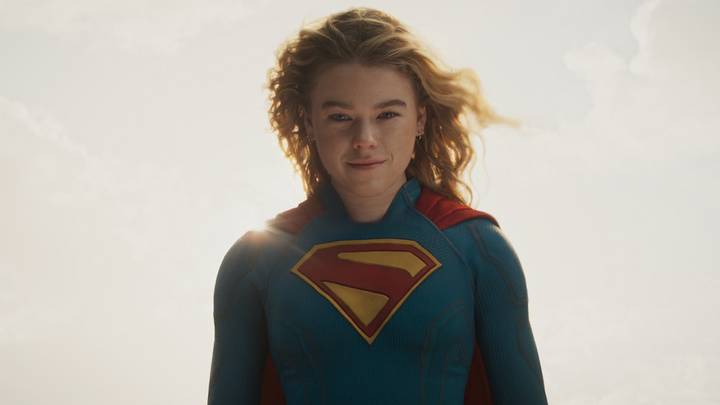
Supergirl has landed in movie theaters, marking the next chapter in James Gunn’s DC Universe. It features plenty of fun action, is driven by emotion, and isn’t afraid to show that strong female leads can be good superheroes despite their imperfections. And just like the titular character, the movie itself is good even if it has its issues.

What worked: Milly Alcock and Eve Ridley as the Supergirl leading duo
Supergirl’s biggest strength was easily its leading ladies. Milly Alcock embodied the messy, emotional nature of this iteration of Kara Zor-El, and Eve Ridley delivered the innocence and determination that Ruthye Marye Knoll requires.
The duo had great chemistry. Ridley’s Ruthye gradually breaks down Kara’s tough exterior to bring out the Kryptonian’s heart and honesty. Alcock’s Kara can’t help but legitimately care for Ruthye, who goes on to accept and acknowledge the real-world experiences and lessons Kara offers. Both characters hunt Krem for their own reasons, but their mission evolves into a journey of self-discovery because of how they change each other for the better.

What needed work: Jason Momoa's purposeless Lobo role
Was Lobo a fun addition to the movie? Yes. Was Jason Momoa a great choice for the character? Also yes. But he didn’t really serve a purpose in Supergirl. He doesn't play an active role in the story, so the narrative could have easily been the same without him. It feels like he was included just to have a major male character (who isn't the villain) in a women-led narrative.
What worked: Superman’s scenes were effective without being overbearing
The amount of Superman scenes in Supergirl was surprising and more than expected, but they worked well. It never felt like Clark’s appearances were forced or trying to cater to a crowd hoping to see the Man of Steel. His presence provided important context to the contrast between them despite their shared heritage. His more hopeful, see-good nature juxtaposed Kara's lost, messy, grief-burdened demeanor in a way that emphasizes what makes Kara her own person, not just Clark's cousin.

What needed work: Krem’s villainous narrative and nonexistent backstory
Accepting Krem as the villain was easy. He murdered an innocent family and felt no remorse for it. He was led the Brigands, a group of pedophilic men who kidnap, abuse, and turn girls into child brides for all-male breeding. He also poisons Krypto, the catalyst for Kara’s involvement. So Krem isn’t someone to root for, and the audience doesn’t need more reasons to root against him. But villains should still be compelling characters. That just wasn’t the case with Krem, though. The movie doesn’t explain his motives or explore his background. It just does surface-level work at showing why he’s a bad guy.

What worked: Krypto actually needing the antidote in Supergirl
Supergirl may be an adaptation of the Supergirl: Woman of Tomorrow comics run by Tom King and Bilquis Evely, but there are various differences between the two. One of the major changes for the movie is that, in the end, Krypto actually needs the antidote to survive. In the comics, Kara lies to Ruthye about needing the antidote for Krypto. That change works really well for the film because of who Kara is and where she’s at.
DCU Kara is still lost and grieving, and she’s not this established, dedicated superhero like her Woman of Tomorrow counterpart. Krypto is truly everything for the DCU character, so Kara just wants to save him. She may care about Ruthye, but in the sense that any good person cares about others would. Because of that, it wouldn’t make sense for Kara to go on such an arduous journey just to teach Ruthye a lesson. That’s also why, if the movie stayed true to the comics, it would have lost its stakes.

What needed work: The pacing of Supergirl
Much like the work done for Lobo and Krem’s stories, the movie as a whole would have benefited from extra time. There was a general lack of urgency that made the film’s pacing feel off. It was tough to tell at times where the story was supposed to be, because the narrative’s progression felt too even.
Kara’s time on Barenton, for example, didn’t feel as dire as it should have. She’s on a planet whose green sun can kill her, so she has to wait out the sunset in hopes of surviving and rejuvenating herself with the yellow sun that follows. Yet the scenes lack the desperation expected of such a situation. On the surface, the green sun concept works, but it was another one of those things where it’d be better if DC played that up and dove into the idea more.
 Add us as a preferred source on Google