

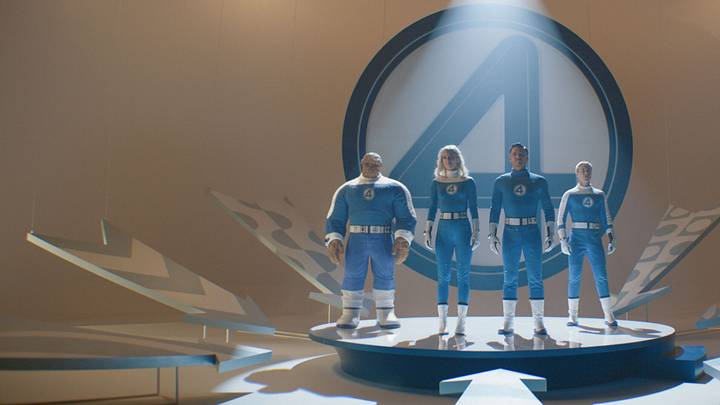
If you like comic books, you're a fan of Jack Kirby, whether you realize it or not. Born Jacob Kurtzberg, the iconic Marvel artist set the superhero standard, designing some of the industry's most popular characters, including Captain America, Thor, Black Panther, and the Fantastic Four.
Though Kirby passed away in 1994 at the age of 76, his legacy lives on today, and several contemporary comic book icons, including Chris Claremont, Adi Granov, and Dean Haspel, came together to celebrate him at the "Year of Jack Kirby" panel at New York Comic Con. Moderated by pop culture historian Roy Schwartz, this panel further discussed Kirby's impact on each attendee, and the industry as a whole, as well as why 2026 is the Year of Jack Kirby.

The year of Jack Kirby
Schwartz began the panel by claiming that Kirby is one of the most important artists of the 20th century of any medium, and the rest of the panelists unanimously agreed. Kirby's style of drawing "in service of the narrative" made comic books and superheroes the staple of American culture that they are today.
As such, Schwartz, among many others, has been working to further honor Kirby after his death. Much of Schwartz' hard work has paid off this year, with a New York City street being renamed Jack Kirby Way. As the cherry on top, Jack Kirby Way is located where both Kirby and one of his most famous characters, Ben Grimm/The Thing of the Fantastic Four, come from.
Additionally, Kirby is the subject of both a New York City stage play titled King Kirby, which ran from August 20 to August 30 of this year, as well as an upcoming documentary, Kirbyvision. A Jack Kirby Museum has also recently opened in NYC, hoping to further solidify his legacy. Kirby's Mister Miracle character will also be getting his own animated series at DC, with Josh Hutcherson recently confirmed to voice the title character, which the panelists confirmed will feature Kirby's name at the beginning of each episode, which is (sadly) unusual for a modern comic book adaptation. Finally, by the panelists' count, the sure-to-be smash-hit Avengers: Doomsday will feature 15 different Kirby characters.

The impact of Jack Kirby
None of the panelists would be involved in the comic book world today without Jack Kirby. Claremont, whose run on the X-Men remains unparalleled, told the story of how he first flipped through a Kirby comic and got hooked on the art form. Having grown up with British comic books, Claremont expected American comics to underwhelm him, but Kirby's striking visuals blew him away, finally hooking him for good with Fantastic Four issue 48.
Said Claremont, "Visually, [Kirby] told stories like no one else. Jack's way of telling goes from ultra science fiction...to mythology and fantasy. This guy can do anything!" In highlighting Kirby's range, Claremont further emphasizes the appeal of the superhero genre and comic book medium: Not often will audiences see characters like Thor and the Fantastic Four, who seemingly come from different worlds, blended together so seamlessly.
Claremont also touched on his understanding of Kirby's creative process with his most famous collaborator, Stan Lee. As he described it, Lee would come in with an idea on the first day, Kirby would bring in a 22-page outline on the second, Lee would trim it down to about three pages on day three, and by the fourth day, Kirby would begin turning in pages. This collaboration, which the panelists compared to creators and showrunners on TV, helped define the modern roles in comic book creation.
Granov, a comic book artist who has also done conceptual work for several big screen adaptations, explained that Kirby's art stems from its silhouettes, which is why so many of his characters are so instantly recognizable. Granov described this as one of his main challenges when adapting these characters to the MCU. He also stated that his favorite Kirby design is Black Bolt of the Inhumans, a character who influences many of Granov's own creations.
Haspiel, an iconic comics creator and Emmy-winning television designer, found Kirby in reverse. He claimed, "I came to Jack Kirby through Frank Miller or John Byrne, since they're doing their own versions of Kirby." This emphasizes how many modern comic readers owe their love of the medium to Kirby without even realizing it, since his influence can be felt in many of his successors' art.
Haspiel also praised the film Thor: Ragnarok, saying its backgrounds looked like Kirby art, which led to better costumes to contrast. Notably, Ragnarok is the best-reviewed Thor film, and its understanding of its Kirby-esque roots is a key factor in its success.
In contrast, Claremont claims that many modern comic book movies "stray too far from their creators without acknowledging them." As such, the influence of iconic artists like Kirby finds itself lost in translation in many adaptations, so many causal audiences don't understand these characters' origins.
Although Jack Kirby created the Invisible Woman, he does not deserve to become invisible himself. This is why turning 2026 into the "Year of Jack Kirby" and celebrating him and his work as much as possible is essential, to further preserve his iconic legacy in a field that sometimes buries it.
 Add us as a preferred source on Google